
Professional Log Home Restoration
Request a Free Quote
Our Restoration Services
Get Your Log Home Repaired in Northern Michigan, the Upper Peninsula, & Northern Wisconsin
Log homes take a beating in this region. Between heavy snow and moisture, even well-maintained cabins eventually reach a point where routine upkeep is not enough. That’s where full log home restoration comes in.
At WEATHERWIZE, we focus on correcting deeper issues like failing finishes, moisture damage, structural log deterioration, and compromised seals. Instead of patching symptoms, our goal is to step back, assess the entire structure, and address what your home actually needs to perform long-term.
Signs Your Log Home May Need Restoration
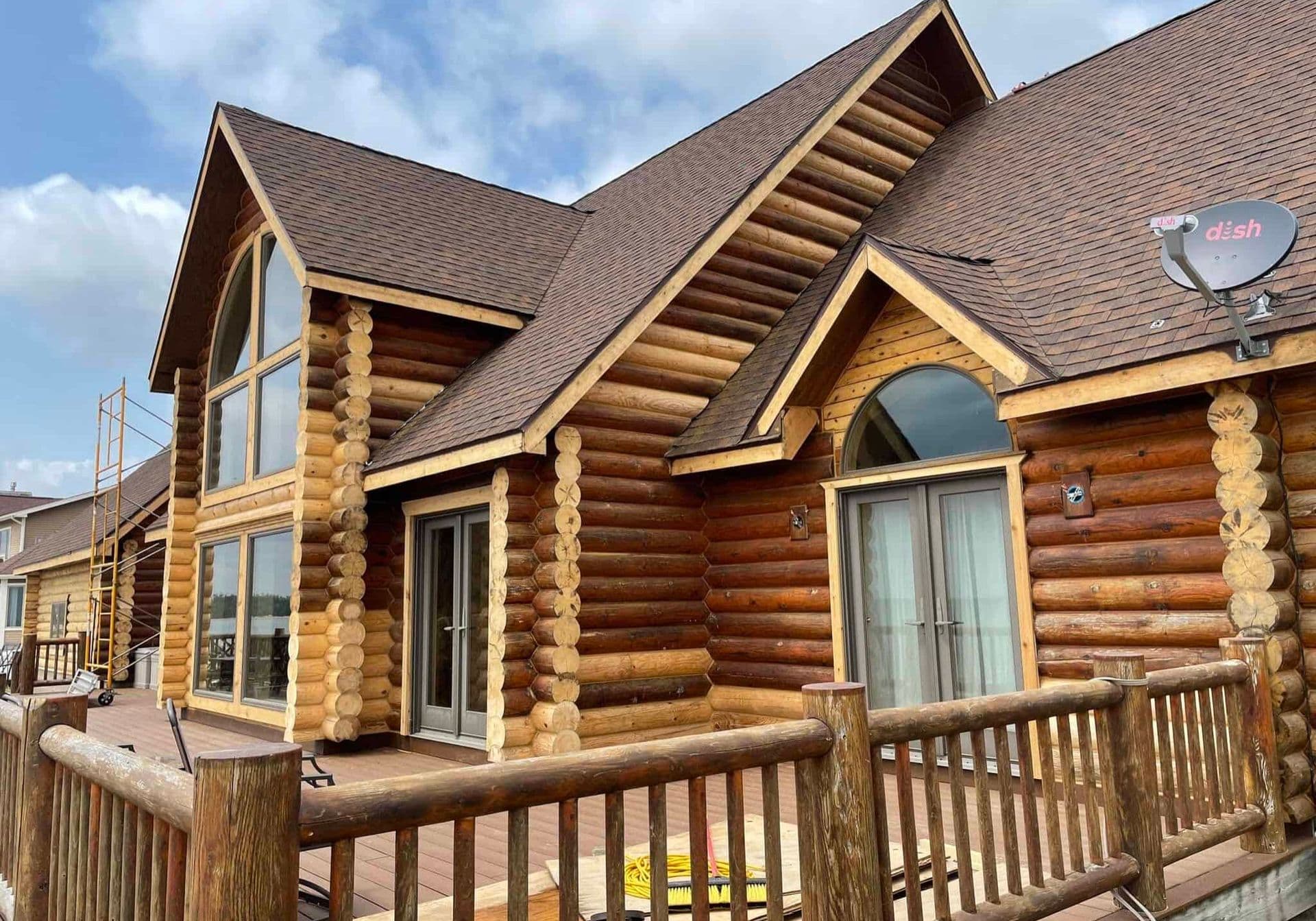
Many homeowners aren’t sure when maintenance turns into restoration. The shift is usually gradual, which is why problems often go unnoticed until they spread.
Here are some of the most common signs:
Logs turning gray or looking heavily sun-bleached
Stain that is peeling, flaking, or no longer repelling water
Soft or spongy wood, especially around seams or log ends
Deep cracks or checking along the length of logs
Discoloration around windows, doors, or chinking lines
Caulk or chinking pulling away from the wood
Moisture entering around flashing, rooflines, or foundation areas
In Northern Michigan and across the Upper Peninsula and Northern Wisconsin, these issues tend to accelerate quickly. Homes that sit through long winters without inspection often show significant wear by spring.
If the structure is still in good shape and the issues are more surface-level, ongoing maintenance may be enough. But when damage runs deeper, restoration becomes the smarter long-term approach.
Our Log Home Restoration Services
Every home is different, so restoration work is never a one-size-fits-all package. The scope is based entirely on what we find during the evaluation. That said, most projects include a combination of the following:
Historic Log Home Restoration
Older cabins and heritage structures require a different approach. Restoration work is carried out with care to preserve the original character while addressing structural concerns and ensuring long-term durability.
Power Washing
Power washing uses heated water to help break down heavier grime, staining, and buildup. It can be a good option for tougher exterior surfaces that require stronger cleaning, especially when dirt or residue has settled in over time. The added heat helps lift contaminants more effectively than standard cold-water washing.
Soft Washing
Soft washing is used for more delicate exterior surfaces where high pressure could cause damage. This method uses a low-pressure application with the right cleaning solution to remove mildew, algae, dirt, and organic buildup from log homes, siding, decks, and other surfaces without driving water deep into the wood.
Pressure Washing
Pressure washing uses controlled water pressure to clean durable exterior surfaces. For log homes, pressure must be used carefully so the wood is cleaned without being damaged or oversaturated. When appropriate, it can remove surface dirt, loose debris, and weathered buildup before additional restoration or maintenance work begins.
Deck Repair
Decks often face the same exposure as the home itself. When needed, we repair or restore deck structures alongside the main project to keep everything working together.
How the Restoration Process Works
Most homeowners reach out with a general concern, not a full diagnosis. You might notice staining, cracking, or a section that just doesn’t look right. We start with a full evaluation of:
Surface condition and finish performance
Log integrity and structural soundness
Moisture entry points
Signs of more serious or hidden damage
From there, we build a clear plan. Surface preparation comes first, followed by repairs, then finishing work. Each step depends on the condition of the wood and how your home is exposed to the elements. At the end of the project, we also provide guidance on maintenance so the restoration work holds up for years to come.
Why Restoration Matters More in the Upper Peninsula & Northern Wisconsin
Log homes in this region face conditions that are simply tougher than most areas. Heavy precipitation, long winters, rapid temperature swings, and strong UV exposure all contribute to breaking down finishes and pushing moisture into the wood. That cycle repeats year after year, which speeds up wear and shortens the lifespan of protective coatings.
A stain system that might last close to a decade in a dry climate often needs attention much sooner here. That’s not a product issue. It’s the reality of the environment. Understanding how these conditions affect your home is key to choosing the right restoration approach and timing.
Materials & Products That Hold Up
The products used during restoration play a major role in how well the results last. We work with proven systems like Sashco, Sansin, Permachink, and Outlast Q8 for staining, sealing, and chinking. Each has strengths depending on the situation, whether it’s flexibility, moisture resistance, or UV protection. Instead of defaulting to one option, we match products to your specific home and conditions so the finish performs the way it should.
Serving Log Home Owners Across the Region
We provide log home restoration and repair services throughout Northern Michigan, the Upper Peninsula, and Northern Wisconsin. This includes areas like Marquette, Escanaba, Iron Mountain, Munising, Petoskey, Traverse City, Gaylord, and Rhinelander. Homes in this region share many of the same challenges, which is why our approach is built around local conditions, not generic solutions. For our full service area, visit our service area page.
Common Questions About Log Home Restoration
If the damage is limited to surface wear and the underlying wood is still solid, maintenance may be sufficient. When you see soft wood, widespread finish failure, or signs of moisture intrusion, restoration is usually the better option.
In most cases, only the affected logs need to be replaced. Full wall removal is rare and only necessary when damage is extensive.
Yes. Restoration can be done in a way that preserves the original look while still improving structure and protection.
Start With a Clear Assessment
Log home restoration starts with understanding what’s actually happening with your structure. If your cabin hasn’t been inspected in a while or something seems off, it’s worth getting a professional opinion. Contact us so we can help you determine the next step before committing to a full project.